


School hours
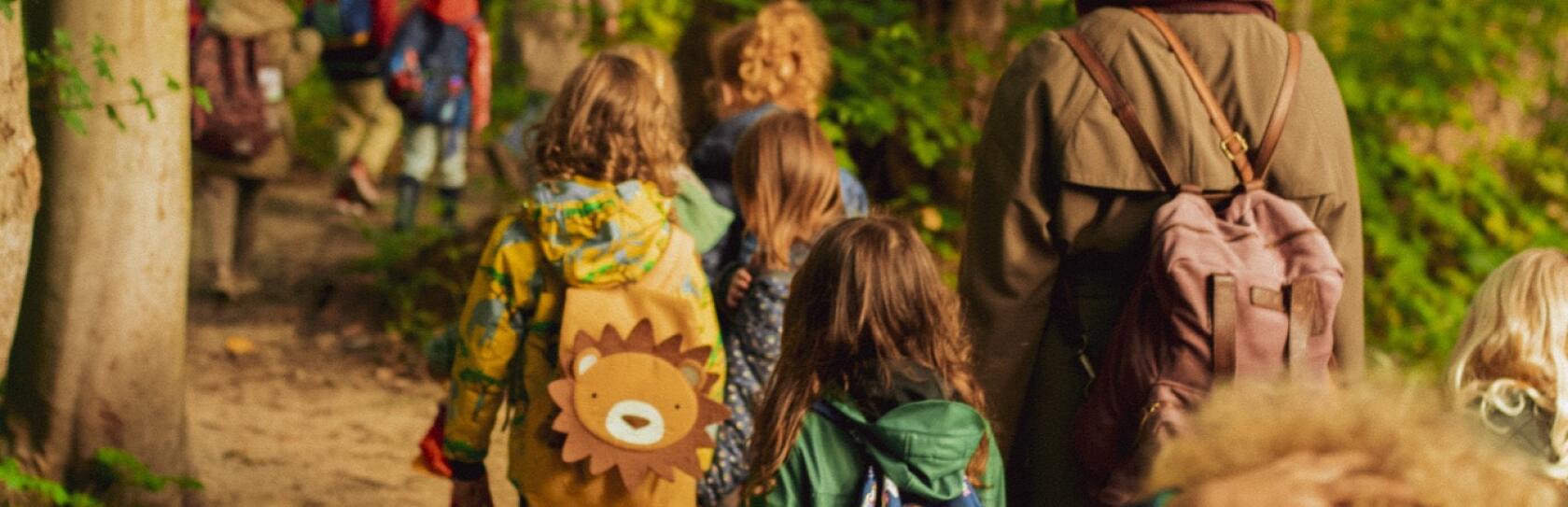
At Thula we have a continuous timetable. The front door opens at 8:20 am. The kindergarten teachers collect the children outside. The other children shake hands at the front door and go upstairs independently, where their teacher receives them. Lessons start at 8:30 am and all school days end at 2:00 pm.
Children aged 4 stay at home on Wednesdays. For them it is a day of rest, and for the older kindergarten children it is a day to work in a smaller group on tasks that prepare them for learning in Class 1.
Holidays and days off
Holidays
- Autumn holiday: 10 October to 18 October
- Christmas holiday: 19 December to 3 January
- Spring holiday: 20 February to 28 February
- May holiday: 24 April to 7 May
- Summer holiday: 10 July to 22 August
Days off
- First school day, 17 August: all kindergarten children off
- Good Friday: 26 March
- Easter Monday: 29 March
- Whit Monday: 17 May
- Keti Koti: 1 July, off from 12 noon
- Last school day: 9 July, off from 12 noon
Study days (all children off)
- 21 September
- 9 October
- 4 January
- 19 February


Calendar
The school year at Thula has a rhythm of its own, with the festivals of the year as a common thread and, around them, class outings and celebrations such as the annual Spring Market. At the start of the year every family receives our weekly calendar. It also lists the parents' evenings, parent-teacher meetings, holidays and study days.
The calendar is more than an overview of dates. Week by week it shows how the year breathes at school: which festivals we celebrate, how we move with the seasons and why we do so. Each festival comes with a short note on where it comes from and what it means, so that you can follow at home what is happening in the classroom. Alongside the school diary there is room each week for your own entries, so that the calendar can also serve as a family planner. The calendar has been made with care and is meant to be hung up, in a place where the whole family looks at it throughout the year. Because something is always changing, we keep the diary up to date in Parro; where it differs from the printed calendar, Parro takes precedence.
We hope our calendar invites you to contribute actively to activities at school, and we warmly welcome all parents to the parents' evenings. Your presence strengthens the connection between home and school, and that connection sustains the community around the class.
Reporting absence
We ask parents to report their child's absence themselves, stating the reason, via the Parro app. It is important that this is done before 8:15 am, so that the school knows about the absence in good time. Teachers can see at a glance which pupils are absent and why. If a pupil is absent without having been reported, the school will phone to ask for the reason. We do this to ensure the children's safety and to be able to respond quickly in unexpected situations.
Contact with teachers
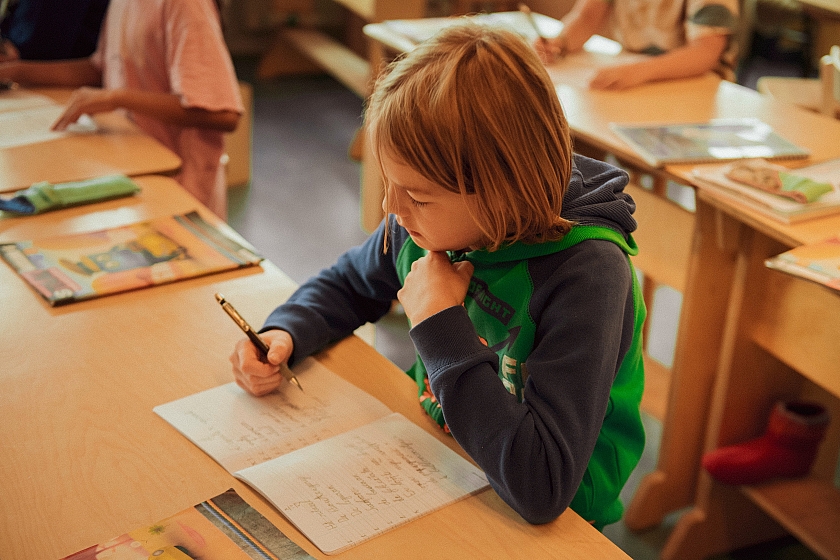
We think it is important to be approachable if you have questions.
Parents (except on Mondays for the kindergarten classes) do not come inside with their children in the morning. Children shake hands at the front door and go to their class independently, so that teachers can give their undivided attention to the start of the day. At those moments we are not available for questions; the colleague at the front door can pass on a message. After school you are always welcome to come in if the classroom door is open. You can pass on practical matters about the day itself via Parro or send a note with your child.
We always try to answer messages on Parro within three working days. We ask parents to write about practical matters or to send a message to arrange an appointment. We discuss substantive questions in a personal conversation. This avoids the misunderstandings that written messages can cause. In a personal conversation we can ask further questions and form a better picture of what is needed.
Lunch and birthday treats
We think it is important that all children have enough to drink and bring a nutritious lunch of bread and vegetables or fruit to school. We ask parents not to send pre-packaged food and drinks. When children have a birthday, they may hand out a homemade treat in their class.
Phone policy
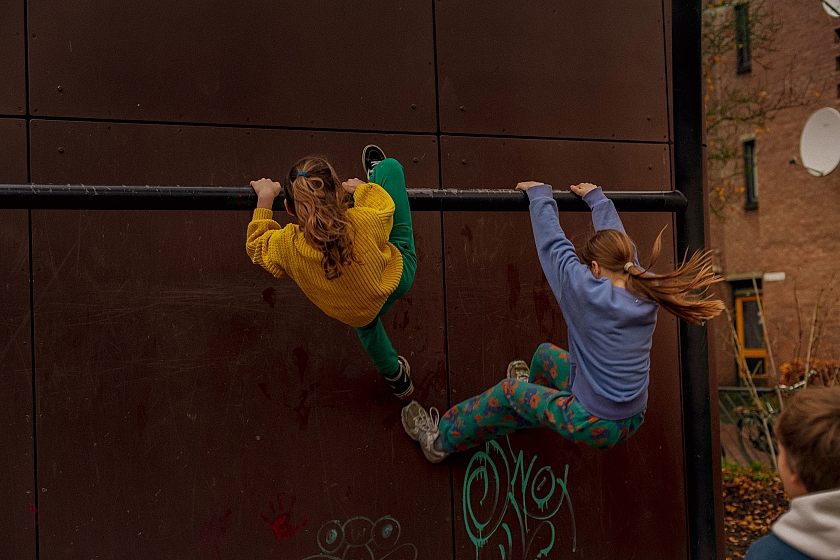
During school hours, pupils do not use mobile phones or smartwatches. We advise leaving these at home; if they are brought anyway, they are switched off and kept in the bag. The school accepts no responsibility for loss or damage.
We ask the same of parents. In the school, on the playground and when helping on outings and at festivals, please keep your phone in your pocket or bag. That asks something of you, but it gives a great deal in return: children notice immediately whether someone is truly present.
Head lice policy
Head lice are a regular occurrence at our school too. On the first Monday after every holiday, parents help to check the children for lice. If lice or nits are found, you will receive a message from the school.
A week later there is a follow-up check. If lice or live nits are then found, we ask you to collect your child and bring them back to school once there are no more lice or live nits. We ask all parents to check their own children at the end of a holiday and to treat them if necessary.
Privacy preferences
Photographs and video
Photos and videos have become an inescapable part of our society. At school we occasionally use them for this website, our school guide or the newsletter.
Parents indicate their privacy preferences for each purpose themselves via the Parro app. If you do not give permission, we will of course not use any images in which your child can be seen.
Photography during festivals, outings and performances
During festivals, class outings and performances we ask you not to take photos and videos and instead to be fully absorbed in what the children are showing. There is often a suitable moment at the end to take a photo of your child, so that the celebration is not disturbed. Sometimes the teacher invites one parent to take images unobtrusively and share them with the other parents after school.
Images in which other children can be seen may never be shared online without the express permission of their parents. We handle your privacy preferences with care and ask the same of you towards other families.
Leave of absence
Leave is planned absence that has been requested in advance and granted. The Compulsory Education Act (Leerplichtwet) recognises two grounds on which leave outside the school holidays can be granted: the specific nature of a parent's occupation, and other serious circumstances. The starting point for both is that the situation is beyond the parents' control, that leave is only given to avoid an unreasonable situation, and that it is kept as short as possible.
Religion and belief
When your child has to fulfil an obligation arising from religion or belief, there is a right to exemption. You give written notice of this to the head of school at least two days in advance; the school neither grants nor refuses it.
This concerns the day or days on which the obligation applies, not every festival within a tradition. The number of days of exemption is set for each religious day; these numbers are listed in the Amsterdam municipality's compulsory education handbook. Where the obligation can be fulfilled within a period of several days, this takes place on a non-school day if possible. Extra days to celebrate a religious festival in the country of origin or to travel there are not covered by the arrangement, and no exemption is granted for carnival. If you are unsure whether a day falls under the arrangement, please contact the school office or head of school Jasper Postema in advance.
Holiday leave
Extra holiday outside the school holidays is an exception, not a right. Leave can only be granted when the specific nature of a parent's occupation makes it impossible to go on holiday together for two consecutive weeks in any school holiday during the school year. This concerns seasonal work or work in a sector with peak periods, where it can reasonably be foreseen that a holiday within the school holidays would lead to insurmountable economic problems for the business. The fact that a significant share of turnover is earned during the school holidays is not enough in itself.
The following conditions also apply:
- once per school year
- at most ten school days
- not in the first two weeks of lessons of the school year
- the application must be accompanied by an employer's statement or, for self-employed people, a statement of your own with an explanation showing that a holiday within the school holidays is not possible
You wait for the head of school's decision before going on holiday.
You can download the holiday leave application form here.
Leave for serious circumstances
Leave can be requested for special events that lie outside the parents' sphere of influence. For each situation the maximum number of school days that will be granted is set, with a total of no more than ten school days per school year:
- moving house: one day
- fulfilling a legal obligation, insofar as this cannot take place outside school hours: at most ten days
- the wedding of a relative by blood or marriage up to and including the third degree: one day in the Netherlands, or two when a long journey is required, and at most five days abroad
- serious, life-threatening illness without prospect of recovery of a relative by blood or marriage up to and including the third degree: at most ten days
- death of a relative by blood or marriage: five days for the first degree, two for the second degree, one for the third and fourth degree, and at most five days abroad
- a work anniversary of 25, 40 or 50 years, or a wedding anniversary of 12½, 25, 40, 50 or 60 years, of parents or grandparents: one day
- other circumstances that the head of school considers weighty: at most ten days
A written document supporting the circumstance must accompany the application.
A number of reasons expressly do not count as grounds for leave. These include visiting family abroad, cheap tickets outside peak season, tickets already bought or sold out, the regional staggering of school holidays, leave because other children in the family are already off, leaving earlier or returning later because of traffic congestion, travelling together or in convoy, a sabbatical and a world trip. A birthday, even a special one, is not a serious circumstance; the same applies to a milestone birthday of a parent or grandparent.
You can download the application form for leave for serious circumstances here.
Application procedure step by step
- You fill in the application form of the City of Amsterdam and hand it in to the school office at least eight weeks in advance. If that period is not possible, explain why.
- Following the application, you may be invited to a meeting.
- The head of school decides on holiday leave and on leave for serious circumstances up to and including ten school days per school year. If it concerns more than ten school days for serious circumstances, the school forwards the application to the compulsory education officer (leerplichtambtenaar), who hears both you and the head of school before deciding.
- You will receive the decision, with reasons, by email from the school office within eight weeks of receipt of the application. You can lodge an objection to the decision within six weeks; the decision states where to send it.
In an acute situation, leave can be granted retrospectively, provided you inform the head of school within two days of the impediment arising.
When a pupil is absent without granted leave, this counts as unauthorised absence and we report it to the compulsory education officer of the City of Amsterdam. This can lead to an official report (proces-verbaal) and a fine.
Guide to making a complaint
We strive to create a good learning and living environment together with pupils and parents. Even so, it can happen that you have a complaint about the school, the school management or a member of staff. We prefer to resolve these where they arise, and therefore work step by step.
Step 1. Conversation with the teacher
If it concerns a pupil or something that happened in the class, please contact the teacher concerned via Parro to arrange a meeting. The teacher will respond within three working days via Parro or by phone. In most cases the problem is resolved through good consultation between parents and teacher.
Step 2. Conversation with the school management
If you cannot resolve it together, or if the complaint concerns the school organisation, you can contact the school management for a personal conversation, via directie@vrijeschoolthula.nl.
Step 3. Confidential adviser
If that does not provide a solution either, you can involve the confidential adviser. The internal confidential adviser is Inka Smans (ismans@vrijeschoolthula.nl), the external confidential adviser is Arsida van Velzen of the national institute of confidential advisers, the Landelijk Instituut Vertrouwenspersonen (arsida.van.velzen@livp.nl, 088-4252305). They advise on next steps and can mediate. What you discuss with them is confidential; action is only taken with your consent, unless safety is at stake or a criminal offence is involved.
Step 4. Executive director
If the complaint is not resolved to your satisfaction at school, you can turn to the executive director of Stichting Vrijescholen Ithaka, Ms M. van Wijnen, via secretariaat@vsithaka.nl.
Step 5. National Complaints Committee
Stichting Vrijescholen Ithaka is affiliated with the Landelijke Klachtencommissie Onderwijs (National Education Complaints Committee). You can submit a formal complaint there if handling the matter within the school and the foundation has not led to a solution. The full complaints procedure that applies to all Ithaka schools is available here.
Parent and Child Team
Do you have questions about your child's development or upbringing, or are there things going on at home or at school that you would like to talk about? Then you can turn to the Parent and Child Team (Ouder- en Kindteam). Every school in Amsterdam is linked to a Parent and Child Team.
The Parent and Child Adviser linked to Thula is in the after-school care (BSO) room on the first floor every Monday morning. You can go to them with all kinds of questions about growing up and parenting, for example about behaviour, sleep, eating, emotions, social contacts or the atmosphere at home. The Parent and Child Adviser is happy to think along with you and looks with you at what support is appropriate.
Appointments can take place at school, in the neighbourhood or at your home. Sometimes it is helpful if the learning support coordinator (intern begeleider) also joins, for example when the questions also concern school. For this you can contact our learning support coordinator Roswitha Bruin via ib@vrijeschoolthula.nl or contact the Parent and Child Team directly:
Parent and Child Team (Ouder- en Kindteam)
Indische Buurt & Oostelijk Havengebied
020 555 5961 (Mon–Fri): 8:30 am–12:30 pm
iboh@oktamsterdam.nl